A Neurodiversity Lens
See What's Actually Happening in the Relationships You're Already Supporting
Many of the clients sitting across from you right now are navigating something that has never been named. Their relationships are marked by genuine effort, genuine care, and a persistent, exhausting confusion that doesn't resolve no matter how hard everyone tries. What looks like communication failure, emotional immaturity, or resistance to growth may be something else entirely: two nervous systems experiencing the same relationship in fundamentally different ways.
The R.E.A.L. Neurodiverse™ Framework begins with a lens. Not a diagnosis. Not a protocol. A way of seeing what has always been there, and of finally being able to help.
Step in. The structure and the support are already here.
What Are Neurodiverse Relationship Dynamics™?
Neurodiverse Relationship Dynamics™, or NRD™, are the distinct, recurring patterns that emerge when people with fundamentally different neurologies attempt to connect, collaborate, and care for one another in close relationships. They are not signs of emotional failure or dysfunction. They are the natural result of two nervous systems perceiving, interpreting, and responding to the world in genuinely different ways.

In neurodiverse relationships, the most painful struggles often arise not from malice or disregard, but from what might be called signal confusion. One person's gesture of love registers as overwhelming. Another's calm neutrality reads as coldness. A request for space feels like abandonment. A need for structure feels like control. Neither person is wrong. Neither is broken. They are simply operating from neurologies that, without support, have no shared map.
These aren't personality quirks or attachment wounds, though they can look like both. They are neurologically rooted patterns affecting how people interpret emotion and tone, process conflict and feedback, experience closeness and autonomy, and understand what mutuality actually looks like in practice. When those patterns go unnamed, they accumulate. Quietly, over years, they harden into resentment, burnout, or a kind of relational paralysis where both people have stopped believing things can be different.
The NRD™ lens changes that. It gives providers and clients a framework for understanding what has been happening beneath the surface of the struggle. Not to assign blame. Not to pathologize. But to finally make sense of something that has felt, for far too long, like no one's fault and everyone's problem.
This Approach Might Feel Different
If something about the R.E.A.L. perspective is resonating, or even just catching your attention, you are not alone. Many providers notice a shift in thinking before they can fully articulate it.
If you would like a short, structured introduction to the full R.E.A.L. Neurodiverse™ framework, you can receive a brief email series that walks through the key ideas step by step.
Designed for providers
Clear and grounded
Meant to support understanding, not overwhelm
No pressure
Just a clear introduction to the framework
The Clients You May Already Be Seeing
Here is something worth sitting with: a significant number of adults currently in therapy, coaching, and relational support are autistic, and neither they nor their providers know it.
Level 1 autism in adults is genuinely difficult to recognize. It doesn't always look the way providers are trained to expect. Many Level 1 autistic adults have spent decades developing sophisticated strategies for navigating a world built around different neurologies: masking discomfort, mirroring social expectations, pushing through sensory and emotional overwhelm in ways that are invisible to everyone around them, including the professionals trying to help. They present as capable, articulate, and self-aware. They are. And they are also exhausted in ways they cannot fully explain, struggling in relationships that should, by all appearances, be working.
Their partners and family members are often exhausted too. And they are often equally confused. They may describe feeling chronically unseen, perpetually responsible for keeping the relational system functioning, or strangely lonely inside relationships they deeply value. These experiences are real. They are also, through the NRD™ lens, recognizable as something specific: the long-term weight of neurological mismatch without a shared framework for understanding it.
When providers work with these clients without the neurodiversity lens, the support often doesn't land, not because the provider lacks skill, but because the model being applied wasn't built for this dynamic. Clients may be encouraged toward communication strategies that feel impossible to one partner and obvious to the other. Relational patterns get attributed to attachment wounds, personality differences, or a lack of effort, when the underlying driver is neurological. Years can pass this way. Clients grow more discouraged. Providers grow more puzzled.

The paradigm shift this framework offers isn't a criticism of what came before. It's an expansion. A new layer of vision that makes it possible to finally see and support what has always been there.
A Note for Providers
Because autism has a genetic component, when a child receives an autism diagnosis, one or both parents may be autistic as well, often without ever having been identified. Parents who arrive presenting around parenting stress, relationship strain, or family overwhelm may themselves be carrying decades of unrecognized neurodivergence. Their child's diagnosis may be the first time anything has pointed in their direction. It's worth holding that possibility.
What Gets Missed. And What It Costs.
When Neurodiverse Relationship Dynamics™ go unrecognized, clients don't just stay stuck; they often come away from the support experience feeling worse about themselves. They've been told, in one way or another, that they're too sensitive or too rigid, that they're not trying hard enough, that they're refusing to compromise, or that the relationship problems they're experiencing are rooted in something about their character or history that needs to be fixed. These explanations feel plausible. They're also, in many cases, wrong.

What looks like emotional immaturity may be structural mismatch. What looks like narcissism may be divergent feedback loops. What looks like avoidance may be overwhelm and self-protection. What looks like codependency may be years of chronic accommodation by someone who never had language for what they were accommodating, or why.
These misattributions are costly. For autistic clients, they often deepen shame and accelerate masking, which creates the appearance of progress while the underlying exhaustion compounds. For non-autistic partners and family members, they can reinforce a false sense of responsibility for the relationship's dysfunction, making it harder to reclaim identity, set boundaries, or trust their own perception of what has been happening.
And for providers, working without this lens means working harder than necessary on problems that are being framed incorrectly — and wondering why the tools that work so reliably elsewhere keep falling short here.
The NRD™ lens doesn't replace clinical judgment. It sharpens it. It makes it possible to look at a relational pattern that has resisted every intervention and ask a different question: what if this isn't a communication problem, a trauma response, or a character flaw? What if it's two nervous systems doing exactly what their neurologies were built to do, without any support for the mismatch between them?
That question changes everything.
A Different Kind of Support
Once the NRD™ lens is in place, something shifts in how support becomes possible. The question is no longer how to get two people to communicate better; it's how to support each person's nervous system in understanding itself, and each other, in ways that are actually neurologically accessible.
This is the foundation of the R.E.A.L. Neurodiverse™ Framework. And it begins with an insight that runs counter to much of traditional relational support: in neurodiverse systems, healing doesn't start in the room where both people are present. It starts with the individual.
Joint sessions, even well-facilitated ones, often backfire in neurodiverse relationships. Without a shared framework, they tend to replay the same dynamics that brought clients in: one person masking, the other over-accommodating, both leaving more discouraged than when they arrived. The relational system needs individual clarity first. Each person needs to understand their own neurology, their own patterns, and the invisible forces shaping their experience before shared conversation can become genuinely productive rather than retraumatizing.
The R.E.A.L. Framework is built around this reality. Autistic clients are supported with structured scaffolding, concrete insight pathways, and carefully paced tools designed to build self-understanding without overwhelm. Non-autistic partners and family members are offered a parallel but distinct path: one that helps them step out of chronic accommodation, reclaim their sense-of-self, and untangle the guilt and confusion that accumulates over years of navigating a dynamic they couldn't name.
Each pathway is equally valid, equally complex, and equally worthy of care. And each one is designed to speak directly to that client's way of processing without projecting blame, assuming sameness, or asking anyone to adapt to a model that wasn't built for their neurology.

When clients have built that individual foundation, the framework then offers structured pathways for shared insight: at the right moment, in the right format, with the right support in place. Not instead of individual work. After it. Because of it.
This is neurologically respectful design: built to honor the way every nervous system works, not reshape it.
The Three-Stage Insight Pathway
Applied at Every Step and Substep Throughout the Program
📹
1. Neurodiversity-Affirming Education
Clients begin with structured psychoeducational modules that establish shared language and neurodiversity-affirming context, offering autistic and non-autistic tracks and family and life partnership focuses.
🌀
2. Individual Integration
Clients engage in structured individual sessions using multimodal integration tools, including guided discussions or modules, reflective exercises, somatic practices, and more. Each is designed to honor individual neurological processing styles.
🌿
3. Relational Discussion
At the completion of each step or substep, individual track work culminates in optional structured shared discussions, bringing autistic and non-autistic participants together for insight-based, neurologically respectful exploration.
When clients understand first, reflect individually next, and only then come together for conversation, insight replaces reactivity, and change becomes more sustainable.
What About Cassandra Syndrome and "Codependency"?
Many non-autistics will arrive having already encountered one or both of these terms, and they deserve to be addressed directly, with both honesty and care.
Cassandra Syndrome, sometimes called Ongoing Traumatic Relationship Syndrome (OTRS), refers to the profound distress experienced by non-autistic partners in neurodiverse relationships: the chronic sense of being unheard, emotionally unseen, and unable to make themselves understood by the person they love most. "Codependency" is another label that frequently gets applied to these same partners, describing patterns of enmeshment, over-responsibility, or loss of self that accumulate over years inside the relationship.
The NRD™ lens does not dismiss either of these experiences. What it does is locate them differently.
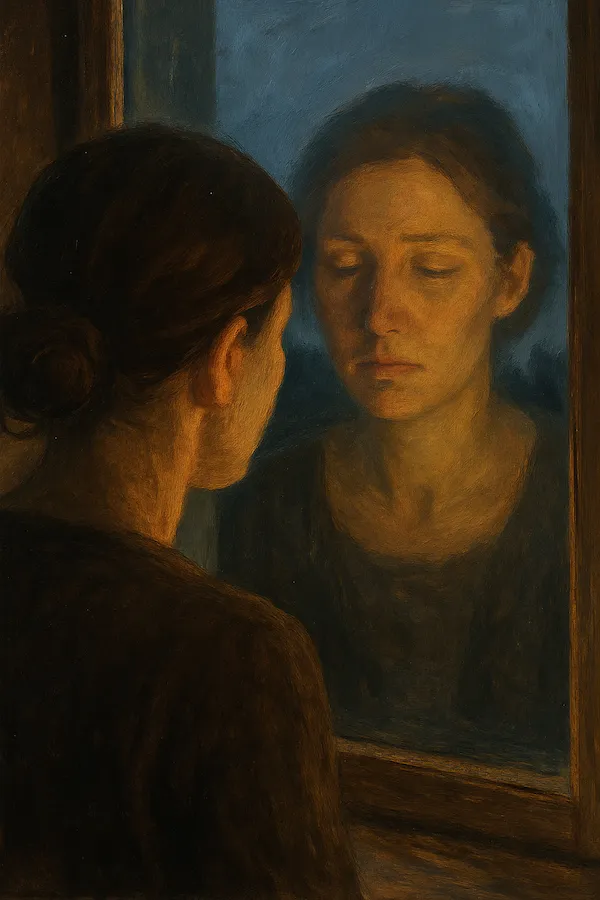
Both Cassandra Syndrome and codependency, in this framework, are not diagnoses; they are descriptions of what happens when neurological mismatch goes unrecognized and unsupported for years inside a close relationship. They describe outcomes of the relational field, not conditions belonging to the individual who experiences them. Patterns that look like enmeshment or chronic over-accommodation are, through the NRD™ lens, often better understood as the long-term adaptation of someone who has been navigating a neurological mismatch they couldn't name. The pattern lives in the relational system. It arose in response to something real. And it can shift when that something is finally seen clearly.
The same neurological mismatch that produces exhaustion, self-doubt, and chronic over-accommodation in the non-autistic partner produces its own parallel burden in the autistic partner: the relentless effort of navigating a world not built for their neurology, the accumulating weight of misreading and being misread, the shame that settles in when connection keeps failing despite genuine effort.
Neither experience is a disorder. Neither is a character flaw. Both are what Neurodiverse Relationship Dynamics™ produce when two people have been left without a shared map.
This framework is built on wholeness, not brokenness: for every nervous system in the relationship. It does not ask providers to choose between validating the non-autistic partner's pain and affirming the autistic partner's humanity. It holds both. Because both are always true.
When clients come in already carrying the language of Cassandra Syndrome or codependency, or already self-identifying through either, this lens offers something the labels alone cannot: not just a name for what has been happening, but a path toward understanding why, and a structure for finally beginning to change it.
Cassandra Syndrome and codependency are real in their effects, and relational in their origins.
This framework locates them where they actually live: in the dynamic between nervous systems, not in the character of any person.
See Your Practice Through A New Lens
The clients navigating Neurodiverse Relationship Dynamics™ are already in your practice. Now there's a framework built to support them, and you, every step of the way. Structured, neurologically affirming, and ready to use from day one.
From confusion to clarity:
for every nervous system in the room.
Step in. The structure and the support are already here.


