Bring the R.E.A.L. Neurodiverse™ Framework To Your Practice
What is This?
The R.E.A.L. Neurodiverse™ 10-Step Family Systems Approach gives providers a comprehensive framework for supporting Level 1 autistic adults, their partners, and their families. It's not open-ended talk therapy or coaching that waits for insight to emerge. It's a structured, developmentally-sequenced pathway—with distinct resources for autistic and non-autistic clients—designed for the way neurodiverse minds actually work.

What Your Practice Gets:
• Complete 10-Step R.E.A.L. Neurodiverse™ programming via UnitusTI
• Client-facing psychoeducational video series
• Divergent materials for autistics and non-autistics
• Quantitative empathy spectrum assessments
• Structured reflection and journaling tools
• Step-by-step implementation guides for providers
• Session-by-session Insight & Integration materials
• Seven integration modalities
• Structured discussion tools for couples and family members
• Role-aligned content for therapists, coaches, advocates, clergy, and educators
• Ongoing program updates and new content
• Tiered credentialing system with gated access to advanced tools
The 10-Step R.E.A.L. Neurodiverse™ Approach
A Structured Yet Flexible Pathway — For You And Your Clients
Each step builds on the last. Clients receive psychoeducational content, reflection tools, and integration materials. Providers receive step-by-step implementation guides, session insight materials, and support for facilitating each phase.
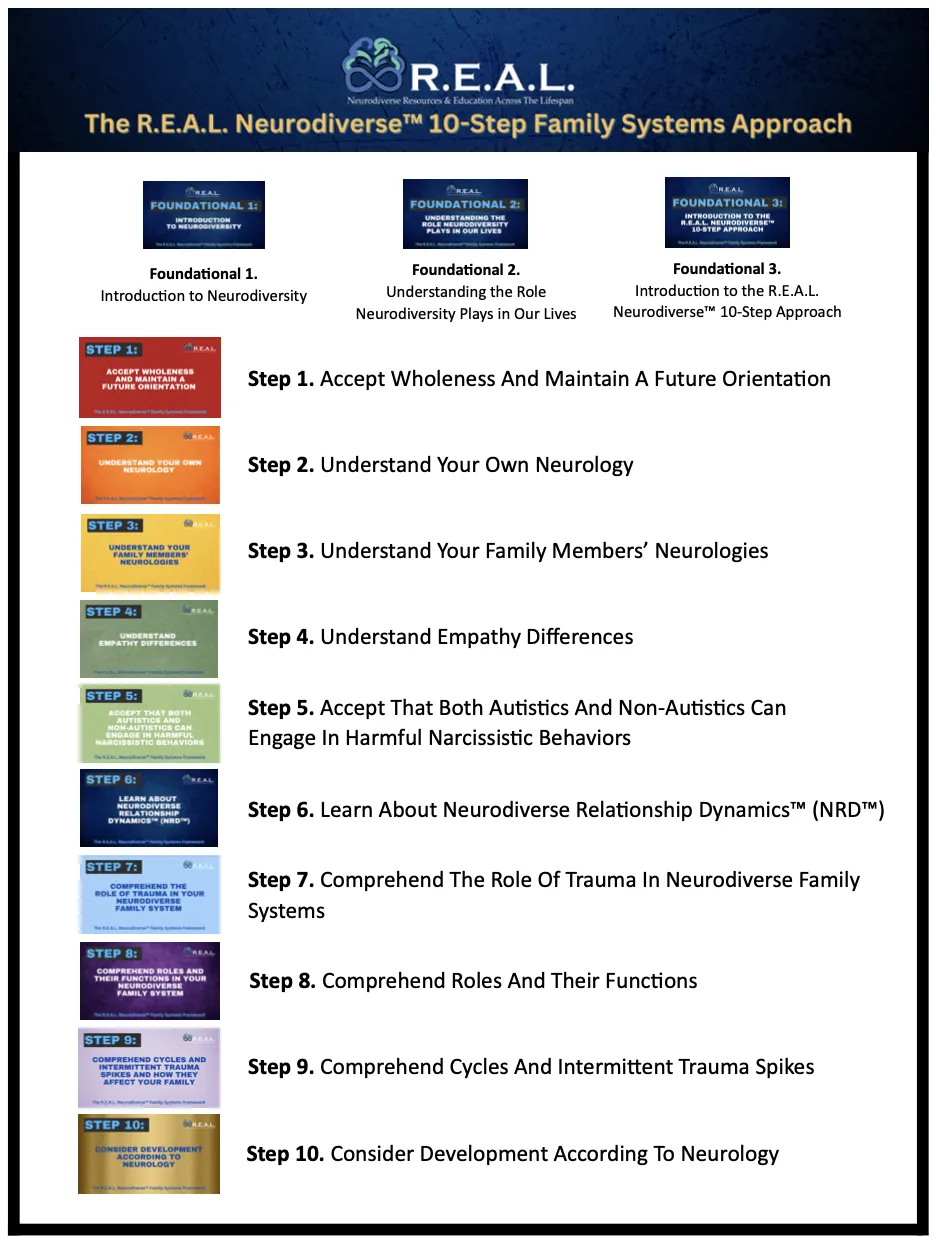
The Three Foundational Modules
Foundational 1: Introduction to Neurodiversity — Establishes shared language for neurodiversity, neurological difference, and inclusive interpretation of behavior.
Foundational 2: Understanding the Role Neurodiversity Plays in Our Lives — Helps clients identify how neurology shapes stress patterns, communication, needs, and relational expectations across the lifespan.
Foundational 3: Introduction to the R.E.A.L. Neurodiverse™ 10-Step Approach — Explains how the program is structured, why the sequence supports development, and how integration builds over time.
The 10 Steps at a Glance
Step 1: Accept Wholeness and Maintain a Future Orientation — Sets a grounding stance of dignity, growth, and possibility—without denial of present reality.
Step 2: Understand Your Own Neurology — Builds self-knowledge about how the nervous system processes experience, stress, emotion, and meaning.
Step 3: Understand Your Intimate Life Partner's or Family Members' Neurologies — Expands perspective-taking by learning how different nervous systems interpret the same events differently.
Step 4: Understand Empathy Differences — Clarifies how empathy can vary across emotional, sensory, and cognitive processes—and how mismatches can create conflict.
Step 5: Accept That Both Autistics and Non-Autistics Can Engage in Harmful Narcissistic Behaviors — Identifies harmful patterns without reducing anyone to a label: supporting accountability, clarity, and safety.
Step 6: Learn About Neurodiverse Relationship Dynamics™ (NRD™) — Explains recurring interaction cycles in neurodiverse systems, translates common relational and psychological concepts into a neurodiversity paradigm, and supports more sustainable relational choices.
Step 7: Comprehend the Role of Trauma in Neurodiverse Family Systems — Connects trauma, stress responses, and nervous system protection strategies to relational dynamics and capacity.
Step 8: Comprehend Roles and Their Functions — Helps clients recognize relational roles, what they protect, and how they shape identity, responsibility, and power.
Step 9: Comprehend Cycles and Intermittent Trauma Spikes — Supports recognition of repeating patterns and escalation cycles so you can respond earlier and more intentionally.
Step 10: Consider Development According to Neurology — Integrates the full model by focusing on growth trajectories, capacity, and sustainable development across neurologies.
Everything You Need To Implement With Confidence
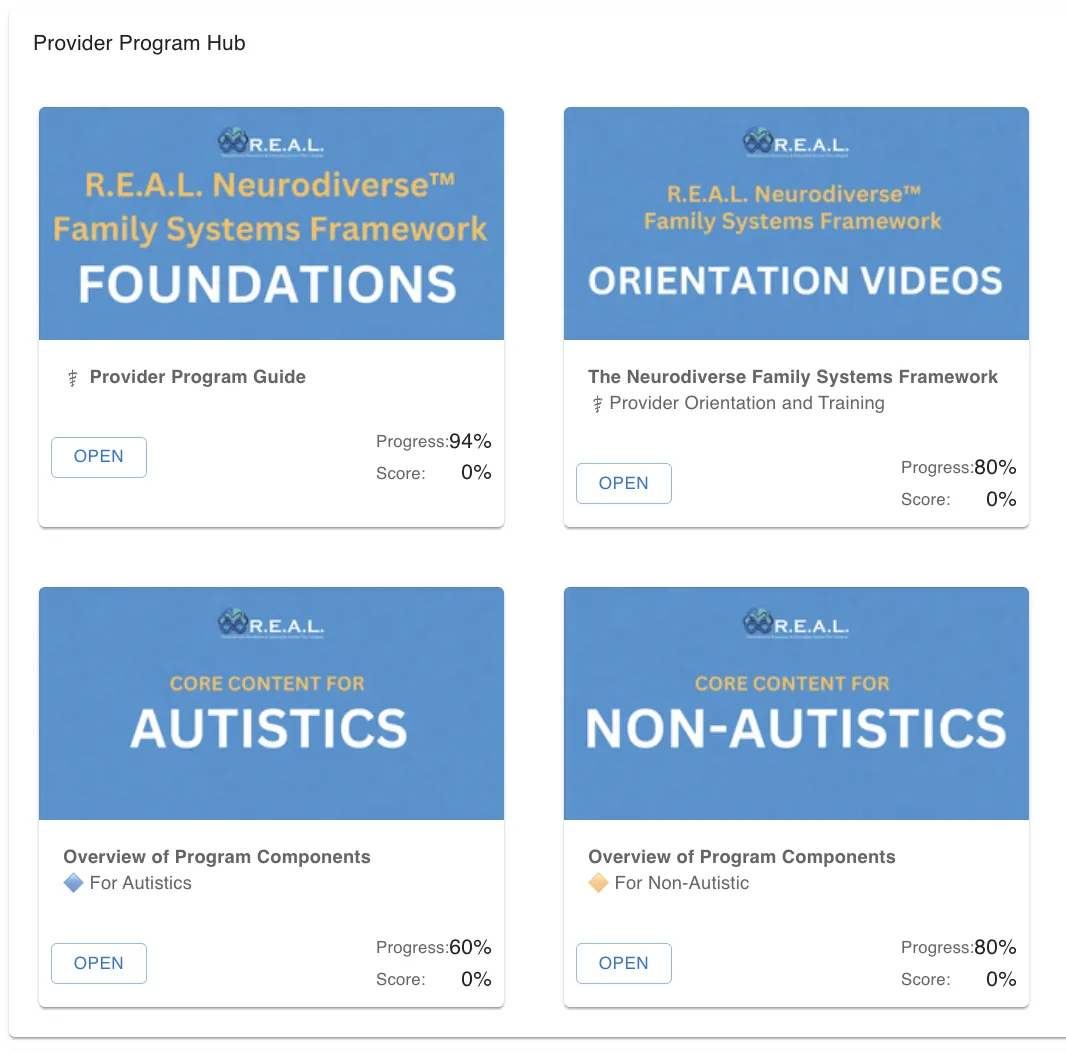
Your Provider Dashboard: Everything organized in one place—foundations, orientation, and client-specific content by neurotype.
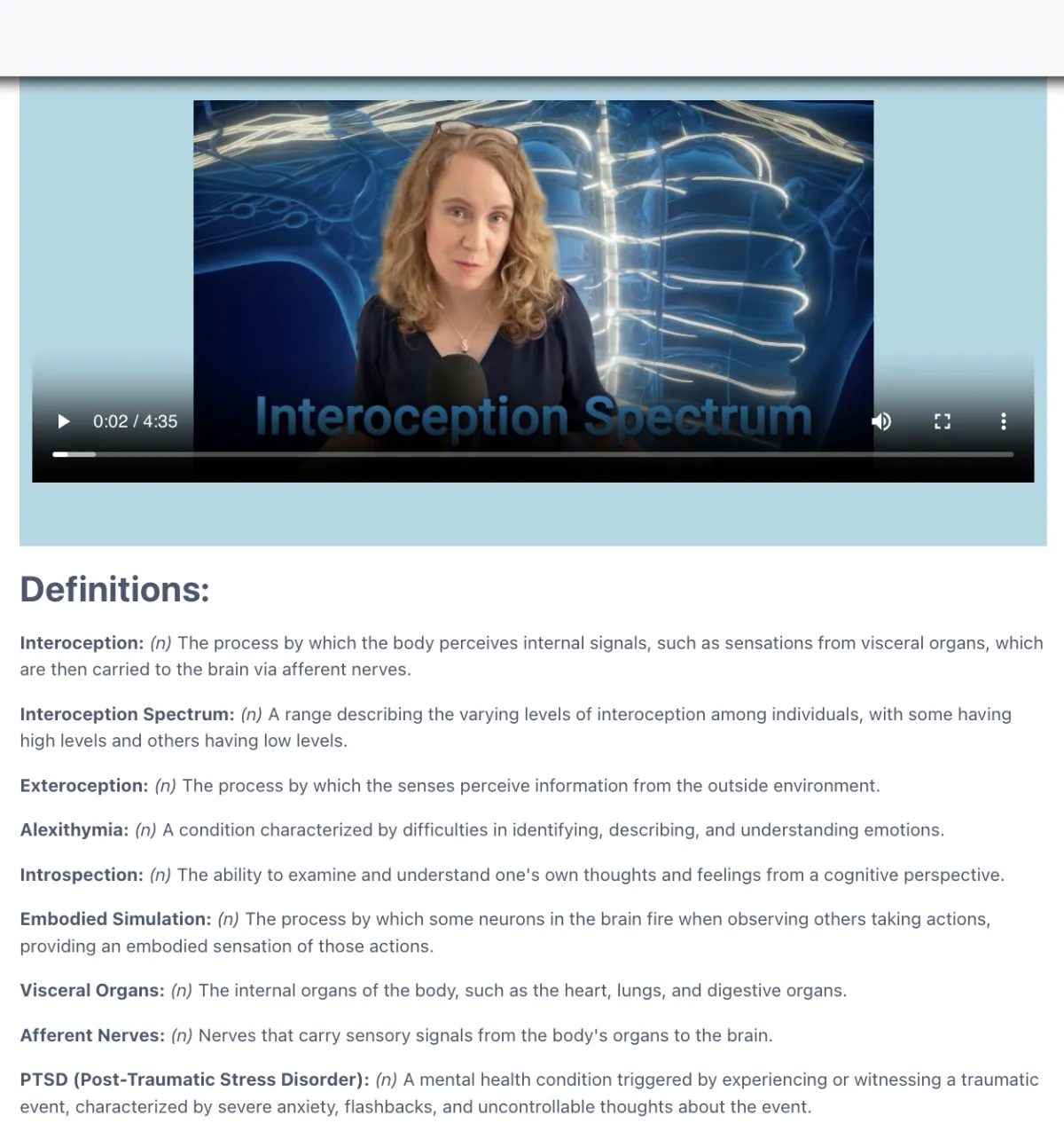
One of 200+ Client-Facing Videos: Structured psychoeducational content your clients access through the program—so you can focus on support, not curriculum.
Provider Resources
The R.E.A.L. Neurodiverse™ 10‑Step Approach — A complete, trauma-informed, neurodiversity-affirming framework that helps clients move from confusion to clarity across individual, family, and partnership dynamics. Built to support both autistic and non-autistic pathways, each step provides structured guidance without oversimplifying complexity.
Step-by-Step Implementation Guides — Clear instructions for applying each phase in real-world practice
Session Insight & Integration Materials — Support for facilitating structured meaning-making throughout the program
Seven Integration Modalities — A diverse set of tools that support embodied, emotional, and cognitive integration: including guided discussions, visual tools, somatic practices, and future-mapping, tailored by neurotype and relationship focus.
Quantitative Assessments — Formal tools to measure interoception, empathy spectrum, theory of mind, and relational dynamics
Mapping Tools — Visual representations of where clients are in the process and how insight is expanding
Ongoing Program Updates — Access to new content, tools, and assessment expansions as the framework evolves
Research‑grounded Materials & Framework Papers — theory, trauma‑informed foundations, and evidence‑aligned resources.
Client-Facing Resources
Psychoeducational Video Series — Over 200 Accessible, structured learning modules
Structured Yet Flexible Reflection & Journaling Tools — Program-aligned exercises to support internal processing
Cloud-based Integration Modality Resources — On-demand access to poems, artwork, somatic practices, journaling prompts, and more — all tailored by neurotype and relationship focus.
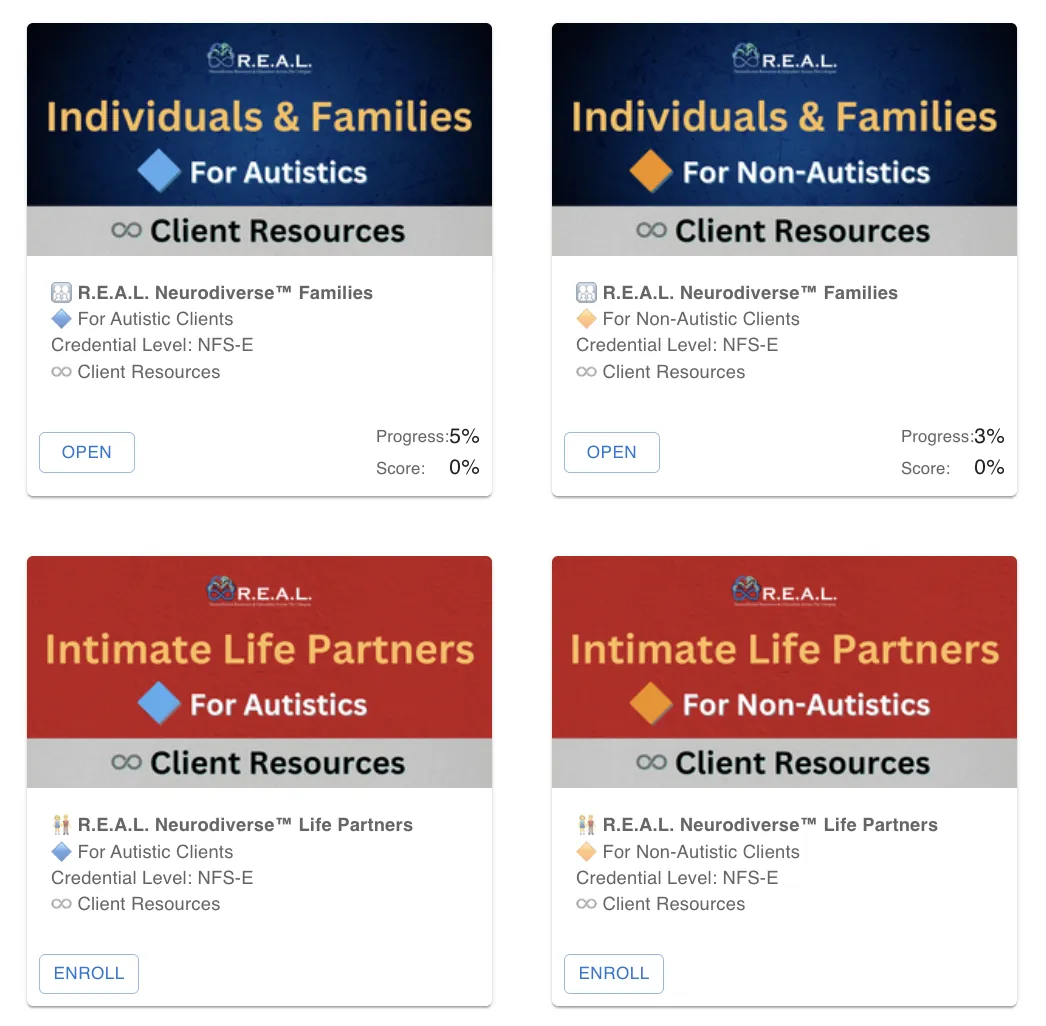
Divergent Resource Tracks — Separate materials for autistic and non-autistic clients, honoring distinct developmental needs
Options for family or intimate life partner tracks — Clients can choose their focus area and shift between tracks as needed, with materials tailored to each relational context.
Multiple Pathways To Integration
Transformational support doesn’t happen by chance — it happens with structure, clarity, and intentional integration.
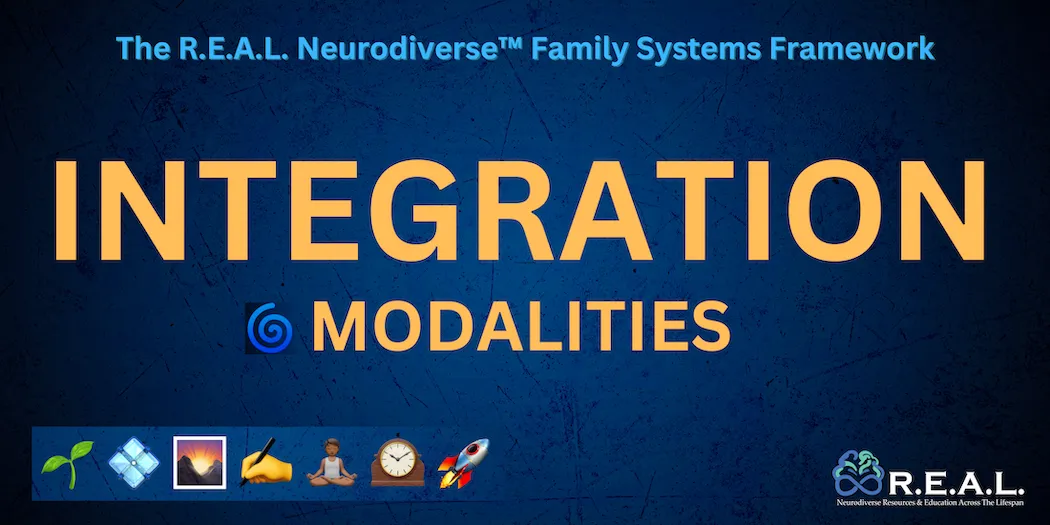
The Seven R.E.A.L. Neurodiverse™ Integration Modalities
Our programs also include access to a diverse set of optional tools, designed to match different ways of processing, learning, and growth. These modalities support true integration — helping insights move from awareness into daily life.
1. Insight & Integration Tools: Guided discussions (non-autistic) or structured modules (autistic) that help make sense of key concepts — at your own pace, in your own way.
2. Integration Poems: Emotionally resonant poems that support self-recognition, validation, and clarity — without pressure to explain or perform.
3. Integration Artwork: Visual metaphors and symbolic images that support emotional insight or sensory grounding — helpful for both verbal and nonverbal processing.
4. Journaling Invitations: Flexible prompts for private reflection, drawing, mapping, or silent thought. Use them in your own time — or not at all
5. Somatic Integration: Body-based tools for emotional regulation, sensory balance, and nervous system clarity — adapted for different interoceptive styles.
6. Reflective Mapping: Story-based identity reflections (non-autistic) or structured pattern/sequence mapping (autistic) to make sense of past roles, relationships, and change.
7. Future Visioning: Present-tense visioning (non-autistic) or structured futures mapping (autistic) — helping you imagine forward with clarity and self-alignment.
Clients don’t need to use every modality. They may choose what resonates. Integration is not about doing everything — it’s about finding what supports growth, at their pace, in their way.
The R.E.A.L. Neurodiverse™ materials and sessions are designed to meet clients where they are neurologically, help them learn how their nervous system works, and guide them toward lasting insight, connection, and confidence in themselves and their relationships.
All Seven Integration Modalities Are Included With The Entry-Level NFS-E Credential!
Divergent Tracks
Separate Resources for Autistic and Non-Autistic Clients
Because autistic and non-autistic brains learn, process, and integrate differently, the R.E.A.L. Framework provides dedicated materials for each. This supports distinct developmental needs without reducing anyone to a label—and allows couples and families to work through the same content in neurologically appropriate ways.
Dual Client Focus Options
Each client comes to this work with a different focus. Some are navigating family relationships — with parents, children, or siblings. Others are working to understand an intimate life partnership.
The R.E.A.L. Neurodiverse™ Approach offers two distinct tracks to support these paths. While the tools and concepts are shared across both, the language, examples, and reflections are tailored to the relational context your individual clients are working on.
A client can start with one track and shift to the other at any time. The structure stays the same — only the focus changes.
Client growth doesn’t reset — it refocuses.
How It Works In Practice

A. Walk alongside your clients As clients move through the 10-step structure, you receive corresponding provider resources—learning in real time how to support neurologically diverse adults with clarity and care.
B. Use with individuals, couples, or families The program works whether one person engages or the whole system participates. When multiple parties are involved, shared theory and neurologically specific tools create common language for growth.
C. Integrate with your existing approach The R.E.A.L. Framework is designed to complement your clinical or coaching practice—not replace your expertise.
The Credentialing Pathway
To access the full R.E.A.L. programs, at least one provider per practice completes the NFS-E (Neurodiverse Family Systems – Educator) credential. This ensures every practice has a designated provider who understands the framework and can guide implementation with fidelity.

The Three Tiers:
NFS-E (Educator) — Entry-level, required for practice access
NFS-S (Specialist) — Advanced, unlocks additional resources and assessments
NFS-P (Practitioner) — Highest level, for complex systems and trauma dynamics
Ready to Bring R.E.A.L. To Your Practice?
Two Simple Options
Group Practice
Tiered Pricing
One Credentialed NFS-E Provider
Full System Access for up to 10 Team Members
Significant Savings at Scale
Solo Practice
$99/month
One Credentialed NFS-E Provider
Full System Access
Cancel Anytime
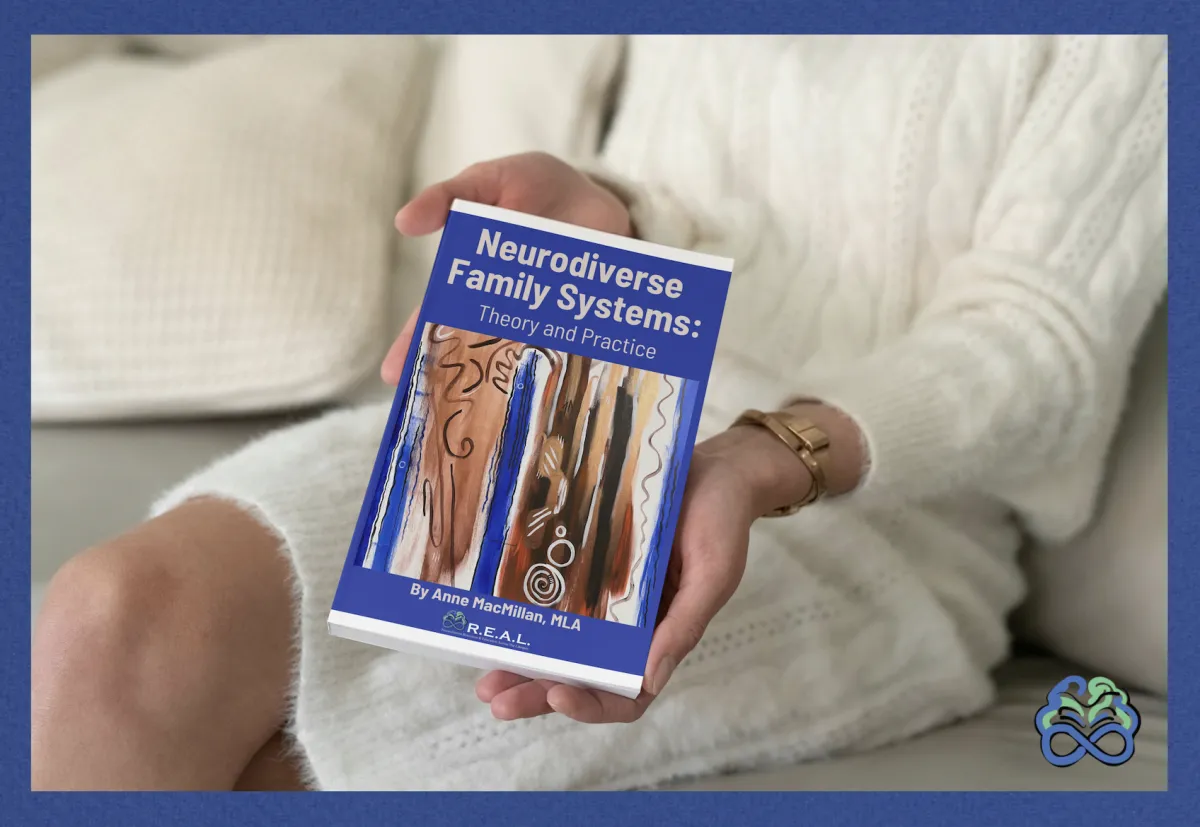
Pre-Order Your
Copy Today
Neurodiverse Family Systems: Theory and Practice
By Anne MacMillan, MLA
© 2026 R.E.A.L. Neurodiverse™
All Rights Reserved
hello@REALneurodiverse.com
Text or WhatsApp: (617) 489-2913 (United States)